Maybe it’s a water stain spreading across the ceiling in the room below. Perhaps it’s a musty smell that won’t improve no matter how much you clean. Maybe the grout in your shower has gone soft and dark in the corners, or the silicone along the floor has started lifting away from the tile. Whatever the sign, you’re probably asking the same question: is this a quick fix? Or is there something bigger going on behind my tiles?
That’s a fair thing to wonder, because shower leaks can be either. The good news is that the causes of leaking showers are well understood, and in almost every case, there’s a specific, identifiable reason behind them, not just bad luck.
This guide walks through why showers leak in the first place, the most common causes we see in Australian homes and how to tell which one you’re likely dealing with before you call anyone.
Why Shower Leaks Are So Common in Bathrooms
A shower is one of the few spaces in your house built specifically to manage constant exposure to water, which is exactly what makes it vulnerable over time. Behind the tiles sits a waterproofing membrane, and between the tiles sits grout and both are doing a job that slowly wears them down. Grout is porous by nature, which means it’s designed to shed water, not block it completely, and that balance tips the wrong way as it ages. Membranes have a working life too. Buildings move slightly as they settle and that movement shows up as hairline cracks in the places water is trying to get through.
This is why shower leak problems tend to cluster around certain home ages. If your house is somewhere between 10 and 25 years old, there’s a good chance the original waterproofing membrane is approaching, or past, its effective life. In the more humid states, such as Queensland and the northern parts of New South Wales, that time can be accelerated as the bathroom rarely gets a chance to properly dry between uses. None of this means your shower was built poorly. It means showers are a wear item, the same way a roof or a hot water system is, and eventually something in that system will need attention.
The Most Frequent Causes of Leaks
Not all leaks come from the same source, and the fix depends entirely on which one you’re dealing with. Here are the causes we see most often and how each one tends to show itself. Working out which applies usually comes down to where the damage is and how it’s behaving: a leak that’s been slow and gradual, building over months points one way, while one that’s suddenly appeared after a crack, impact or recent clean with harsh chemicals points elsewhere. That distinction is worth knowing before you decide your approach to fixing it, because a wrong guess leads to the wrong repair.
Deteriorated or Cracked Grout
Grout is porous, and it wears down with age, harsh cleaning chemicals and the ordinary movement of a building. Once it’s compromised, it stops shedding water the way it’s meant to and starts letting it through instead. You may notice grout that looks crumbly, is discoloured compared to the rest of the shower, or feels soft when you press it with your fingernail.
Failed or Perished Silicone Seals
The flexible joints, where the wall meets the floor, or the tile meets the shower screen or tapware, move more than the rest of the shower, so they’re built to flex rather than stay rigid. Over time, that flexibility breaks down, the silicone shrinks, yellows or lifts away from the surface and it’s often the first visible sign of a leak.
Waterproofing Membrane Failure
This is the most serious cause on the list, because the membrane sits behind the tiles where you can’t see it. If it’s failed, regrouting or resealing on the surface will not stop the leak as it’s not a surface-level fix. This is usually what’s going on when a leak keeps reoccurring, or when water is appearing somewhere that doesn’t line up with any visible grout or silicone damage.
Poor Original Installation
Not every leak is about age. Incorrect fall to the drain, meaning the floor doesn’t direct water properly, or inadequate membrane coverage around penetrations like the shower niche, hob or drain itself, are installation faults that can surface years after the bathroom was built, particularly in older builds or budget renovations where corners were cut initially.
Cracked Tiles or Substrate Movement
Building settlement or a single impact-damaged tile can open a path straight through to the membrane underneath. A single cracked tile might look like a minor cosmetic issue, but it can be all it takes to let water track into the wall or floor cavity over time. In most cases, tile regrouting around the affected area is enough to stop it before any larger damage sets in.
How Professional Repairs Fix The Root Cause
The most important part of leaking shower repairs is working out which of the causes above is actually responsible, because grout failure, membrane failure and an installation fault are each repaired differently. Fixing the wrong one not only wastes money, but it leaves the real problem untouched and the leak remains unchanged.
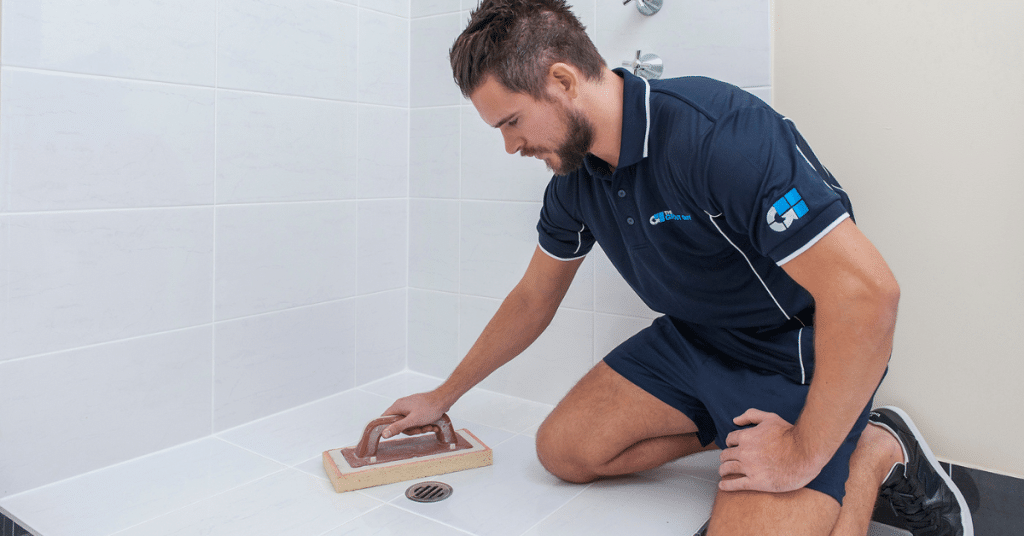
Where the cause is grout or sealant failure, which is the majority of cases, we fix it without removing a single tile. That means no demolition, no weeks out of your bathroom and a cost that reflects the actual job rather than a full retile. Pricing is fixed and quoted upfront, so what you’re quoted is what you pay, with no hidden extras added once the work is underway. A full shower regrout is backed by a 10-year waterproof warranty, so if the grout fails again within that window, it’s covered and not yours to chase down.
It’s worth noting upfront: if the underlying cause turns out to be a failed waterproofing membrane rather than the grout, that’s a different scope of work and an honest assessment will tell you that rather than promising a surface fix for a problem that sits underneath it. Every technician on The Grout Guy team, wherever you are in the country, is trained to the same standard and to diagnose the actual cause first, which is why the fix tends to hold rather than needing to be redone a few months later.
When To Get It Looked At
Not every sign of wear means you’ve got a serious problem on your hands. A bit of discoloured grout on its own isn’t necessarily urgent and plenty of showers carry a few cosmetic marks without anything structural going on underneath. But a musty smell that persists, silicone that’s visibly lifting or grout that’s gone soft are all signs worth acting on sooner rather than later, because what starts as a grout or sealant issue can, left long enough, start affecting what’s underneath it. That’s the point when a simple fix turns into a larger, more expensive issue.
If you’re already seeing one of those signs, it’s worth getting a proper look before guessing at the cause yourself. Contact our team, we’ll organise an inspection, tell you what’s going on with your shower and the best approach of rectifying it properly the first time.