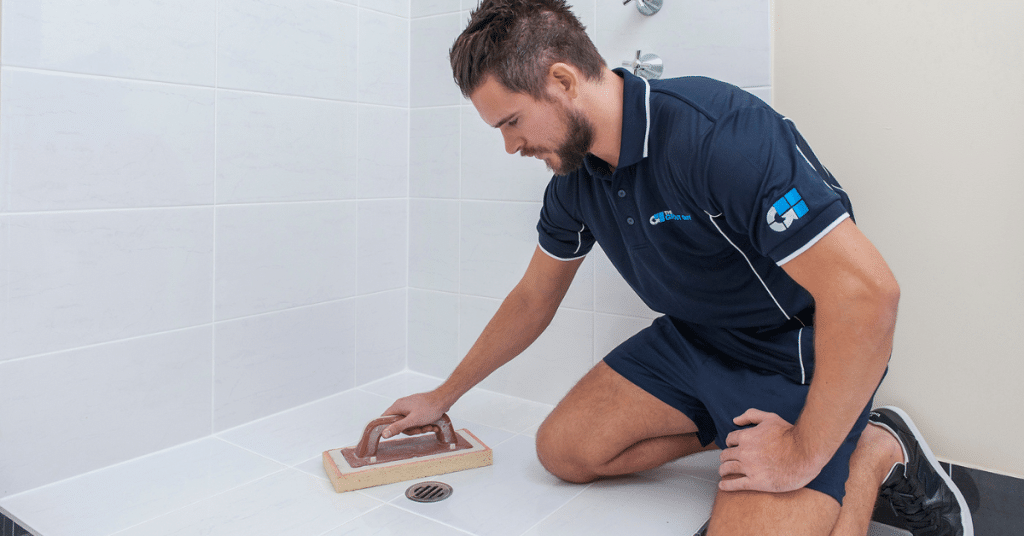
You’ve noticed the grout in your shower is looking rough. Maybe it’s gone black in the corners, maybe it’s started crumbling when you run a fingernail along it, maybe there’s a patch that’s gone soft. You’ve had a look online, found a few tutorials and now you’re wondering whether this is a Saturday-afternoon job or something you need to call someone in for.
It’s a fair question. Regrouting looks like a reasonably simple task from the outside: scrape out the old stuff, mix up the new stuff and push it into the gaps. Plenty of homeowners have a go on their own and there’s nothing wrong with being handy. But your shower’s grout is a key part of your bathroom’s waterproofing system, which changes what’s at stake if the job is completed imperfectly. Here’s how DIY regrouting and professional regrouting actually compare and where each one makes sense.
Why Many Homeowners Attempt DIY Regrouting
The appeal is easy to understand. A tub of grout costs a fraction of a tradesperson’s callout fee and a few YouTube videos make the process look straightforward: remove, clean, apply, wipe back. If you’ve noticed the problem early and just want to stop it getting worse before you commit to calling anyone, doing it yourself feels like the sensible first move.
For some homeowners, it’s less about the money and more about trust. A bad experience with a tradie in the past, being overcharged, left waiting or receiving subpar work can make doing it yourself feel like the safer option.
Both are reasonable instincts. The problem is not the motivation, but the assumption underpinning it: that regrouting is a cosmetic job. It isn’t. Grout is one part of a layered waterproofing system that includes the membrane underneath your tiles, and if that system isn’t fully understood before you start, a DIY regrout can patch over a symptom while the actual cause keeps working away behind the tiles.
Common DIY Mistakes That Cause Leaks
We see the same handful of mistakes come up again and again, usually a few months after an original DIY job, once the new grout has already failed.
- Not Removing All The Old Grout: Any contaminated grout left in the joint stops the new grout from bonding properly. What looks fine on day one can begin to lift within weeks.
- Using The Wrong Grout For A Wet Area: Not all grout products are rated for constant water exposure and the wrong mix ratio makes it worse. Get this wrong and you’ve got a joint that looks solid but isn’t sealing anything.
- Treating Grout As The Whole Fix: If the waterproofing membrane underneath the tiles has already failed, regrouting the surface won’t stop the leak. It just hides it for a while.
- Not Respecting Cure Time: New grout needs time to cure properly before it’s exposed to water again. A shower used too soon after the job compromises the seal before it’s even had a chance to set.
- Missing The Signs The Leak Has Already Tracked Further Than The Grout: By the time grout looks visibly damaged, water can have already found its way into the wall or floor cavity. Regrouting over the top doesn’t address what’s happening underneath.
- Confusing Silicone With Grout: Silicone is a flexible seal for movement joints, but it’s not a substitute for structural grout. Using one to patch over a problem the other should be solving just delays the leak but doesn’t stop it.
None of these are the result of someone being careless. They’re the result of a job that looks simple on the surface but depends on things you can’t see. And once it goes wrong, it might not show up straight away. It shows up weeks or months later as a leak that’s already done some of its damage before you notice it.
Regrouting Shower Cost Comparison: DIY vs Professional
On paper, DIY looks cheaper. A tub of grout, a grout removal tool and an afternoon will run you a lot less than a professional callout.
The real comparison isn’t the cost of the job, it’s the cost of the job if it fails. A DIY regrout that doesn’t address the waterproofing underneath doesn’t fail cheaply. It fails as water damage: swollen skirting, damaged flooring and mould that’s spread past the point of surface cleaning. At that point, you’re paying for the original materials, the repair and the damage the failed repair allowed to happen.
Professional regrouting costs more upfront because it starts from a proper assessment of what’s actually going on, not just what’s visible. That’s the difference: a quote that covers the job as it actually is, backed by a warranty, versus a DIY job that might hold or might not and you won’t know it’s failed until it’s expensive to fix.
Why Professional Regrouting Delivers Better Results
The real advantage of calling in a professional isn’t that they can apply grout more neatly. It’s that they know what they’re looking at before they start.
A proper assessment identifies whether you’re dealing with failed grout, a failed waterproofing membrane, or a plumbing issue, because those three things get fixed in completely different ways, and treating the wrong one gets you nowhere. From there, a full shower regrout comes with a 10-year waterproof warranty, so if something does go wrong, it’s covered and not your problem to chase down.
We also don’t remove tiles to regrout a shower. Most of the industry either wants to or can’t offer an alternative. Being able to fix the actual cause of a leak without pulling your bathroom apart means less disruption, less cost and no reason to put the job off any longer.
Pricing is fixed and quoted upfront. What we quote you is what you pay, and no surprises are added once the job’s underway. Every technician on The Grout Guy’s team is trained to the same standard, which is why you’ll hear the same thing from customers across the country: the job’s done properly and the bathroom is left cleaner than they found it. This is a key business rule that we were founded upon and it still shows up in our work.
Is DIY Regrouting Ever Worth It?
If it’s a small, low-risk touch-up, a bit of cosmetic tidying on grout that’s still structurally sound, DIY is reasonable. It’s a different story once you’re dealing with a shower that’s already showing signs of a leak, or any work that touches the waterproofing membrane. At that point, what looks like a grout problem may not be one and that’s exactly the kind of thing worth getting properly assessed before you start pulling anything apart.
If you’re not sure which side of that line your bathroom sits on, contact our team before you grab a trowel. We’ll tell you straight what’s actually going on, quote you a fixed price for whether it’s a straightforward shower regrout or a broader tile regrouting job, and we back all full shower regrouts with an industry-leading 10-year waterproof warranty.